Academics & Research
Ask the big questions. Serve a world in need.
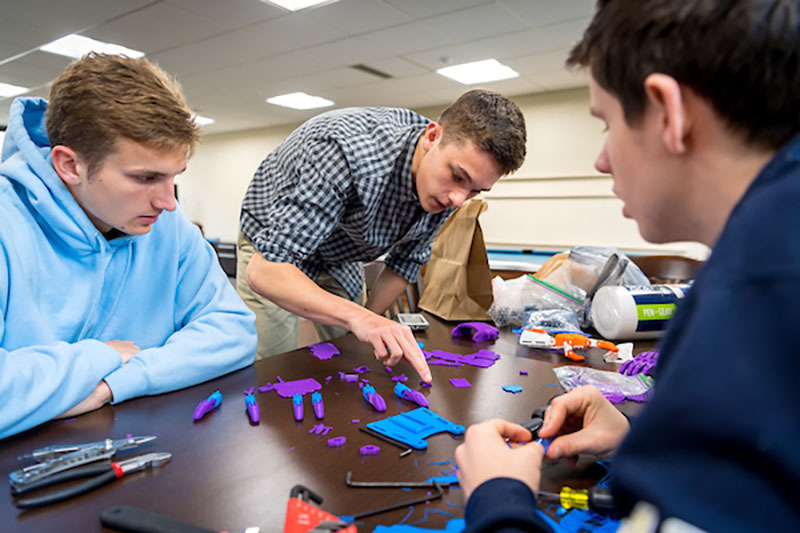
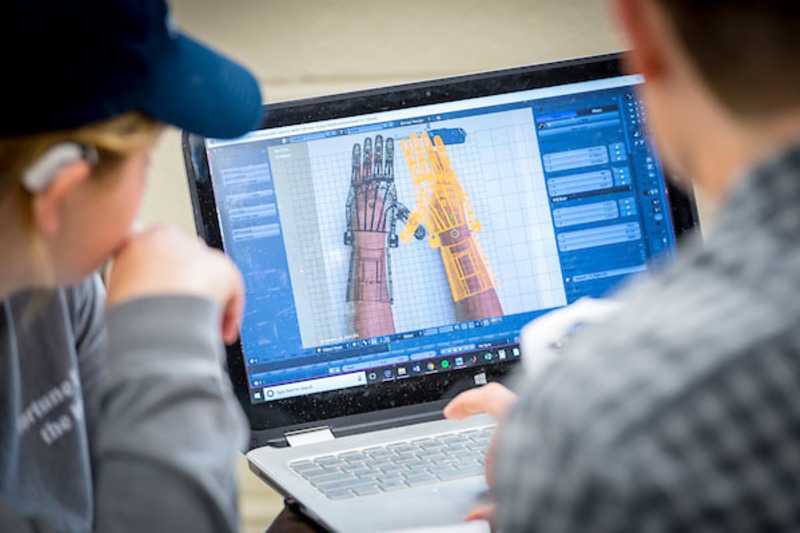
Notre Dame challenges students to pursue knowledge with purpose. Through rigorous academics, meaningful research, and close collaboration with world-renowned faculty, undergraduates are encouraged to explore big questions while discovering how their talents can serve a world in need.
Notre Dame is consistently ranked among the elite universities in the United States, placing in the top 20 in the 2025 rankings by entities such as LinkedIn, U.S. News & World Report, the Wall Street Journal, and College Consensus.
Students take advantage of opportunities across every discipline, from cutting-edge science labs and interdisciplinary research centers to the performing arts and the humanities. And graduates leave Notre Dame prepared to think critically, lead thoughtfully, and make a meaningful impact in the world.
- 98% of students return for their second year (one of the highest rates in the country).
- 95% of students graduate on time, one of the highest graduation rates in the nation.
- 97% of graduates are traditionally placed in careers, graduate schools, or service opportunities within six months of graduation.
- 90% of students participate in internships or conduct research before they graduate.
Majors
You have more than 70 paths to a bachelor’s degree. The choice is yours.
- College of Arts and Letters
- College of Engineering
- Mendoza College of Business
- College of Science
- Keough School of Global Affairs
- School of Architecture
College of Arts and Letters
- Africana Studies*
- American Studies
- Anthropology
- Arabic
- Art History
- Chinese*
- Classics*
- Computer Science
- Design
- Economics
- Education, Schooling and Society*
- English
- Film, Television, and Theatre
- French*
- Gender Studies*
- German*
- Greek and Roman Civilization*
- History
- International Economics
- Italian*
- Japanese*
- Latino Studies*
- Mathematics
- Medieval Studies*
- Music
- Neuroscience and Behavior
- Philosophy
- Philosophy and Theology
- Political Science
- Program of Liberal Studies
- Psychology
- Romance Languages and Literatures*
- Russian*
- Sociology
- Spanish*
- Studio Art
- Theology*
*Available as a major or supplementary major: supplemenatary majors are pursued in addition to a student's primary major.
College of Engineering
- Aerospace Engineering
- Chemical Engineering
- Civil Engineering
- Computer Engineering
- Computer Science
- Electrical Engineering
- Environmental Engineering
- Mechanical Engineering
Mendoza College of Business
- Accountancy
- Business Analytics
- Finance
- Marketing
- Strategic Management
College of Science
- Applied & Computational Mathematics and Statistics
- Biochemistry
- Biological Sciences
- Chemistry
- Environmental Sciences
- Mathematics
- Neuroscience and Behavior
- Physics
- Physics in Medicine
- Preprofessional Studies
- Science - Computing
- Science - Education
- Science Pre-Health**
- Statistics
**Available as a supplementary major only: supplemenatary majors are pursued in addition to a student's primary major.
Keough School of Global Affairs
- Global Affairs
- Asian Studies**
- Peace Studies**
**Available as a supplementary major only: supplemenatary majors are pursued in addition to a student's primary major.
School of Architecture
- Architecture (5-year program)
The School of Architecture encourages undergraduate students, beginning in their fourth year, to participate in one of three concentrations: Architectural Practice and Enterprise, Furniture Design, or Preservation and Restoration. These concentrations develop specialized skills that benefit students in the workplace and beyond.
Undergraduate Research
Explore what inspires you.
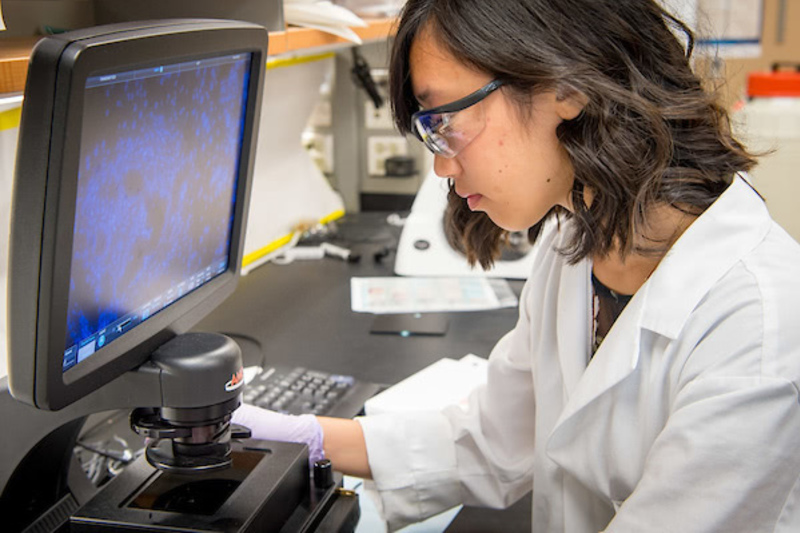
Every major offers opportunities to explore, create, and discover. Study ancient architecture in Rome, help advance cancer research at the Mike and Josie Harper Cancer Research Institute, or create original work at the DeBartolo Performing Arts Center. Supported by resources like the Flatley Center for Undergraduate Scholarly Engagement and world-class research facilities, students are empowered to explore their interests and turn curiosity into discovery.
World-Changing Research
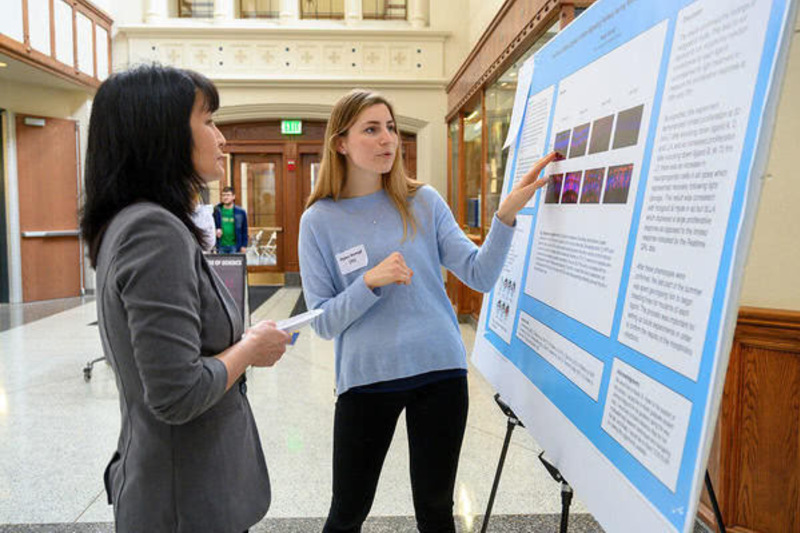
Neuroscience and behavior major Haley Kempf ’20 (right) studies zebrafish in order to discover a link between the fish and human cell regeneration in diseases of the eye, which affects millions worldwide.Our Faculty
Experts in Every Field
Beyond their research accomplishments and accolades, Notre Dame faculty are first and foremost your teachers, mentors, and partners in intellectual discovery. They will push you to consider new perspectives, help you identify meaningful research and internship opportunities in your field, and offer guidance as you prepare to make the world a better place.
- 30+ professors have been elected to the American Academy of Arts and Sciences, the nation's leading learning academy.
- SINCE 1999 Notre Dame faculty members have won more fellowships (71) from the National Endowment for the Humanities than any other institution in the country.
- 8:1 Student to faculty ratio
- 90%+ of full-time faculty have terminal degrees and doctorates.
Featured Faculty
These three faculty members were recently awarded fellowships from National Endowment for the Humanities.
At Notre Dame, these types of accolades are more common than you think. Your professors are at the top of their respective fields, conducting research that is changing the world. For four years, you get to debate and interact with them closely in small classes, connect with them during their office hours, and work alongside them on meaningful research projects.
-

Marisel Moreno
Professor of Latina/o Literature in the Department of Romance Languages and Literatures
-

Jon Bullock
Assistant Professor of Ethnomusicology
-

Therese Cory
Professor of Thomistic Studies in the Department of Philosophy
Revolutionary Resources
Big discoveries begin with the right resources. Through state-of-the-art labs and more than 20 core research facilities, Notre Dame students collaborate with faculty, pursue innovative research, and explore ideas across every discipline. These facilities offer just a glimpse of the opportunities available to undergraduates.
-
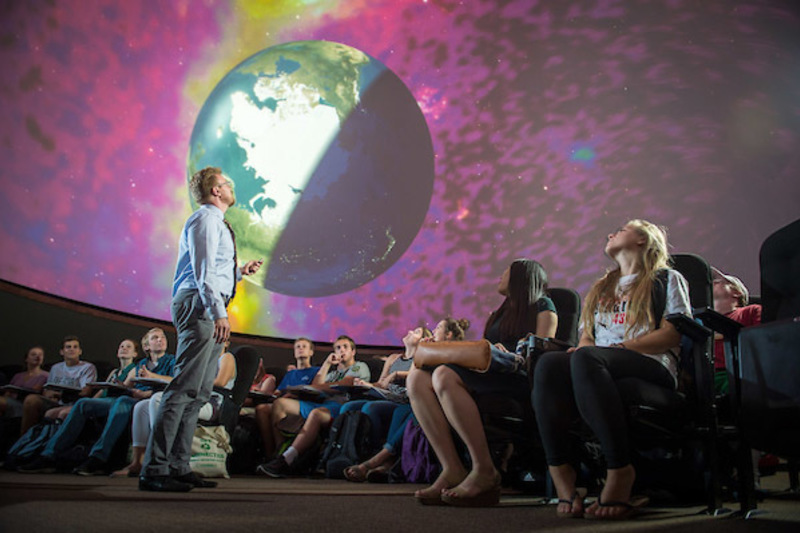
Digital Visualization Theater
Undergraduates utilize the 50-foot domed ceiling of the Digital Visualization Theater, located in the Jordan Hall of Science for hands-on scientific research, not just observation. Students can explore 3D models of complex molecules, view the internal structure of the human body as revealed by CT or MRI medical imaging technologies, and to hurtle through outer space, from the Notre Dame campus to the edge of the observable universe.
-
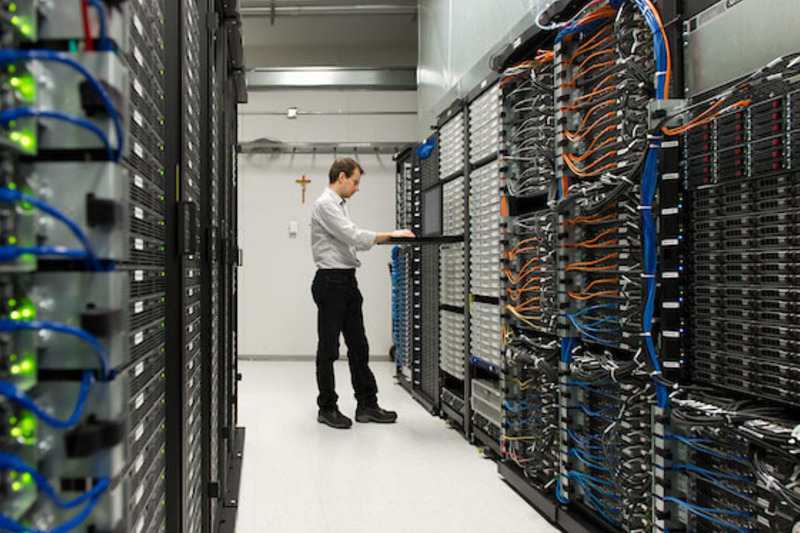
Center for Research Computing
Undergraduates can take advantage of the resources at the Center for Research Computing, a state-of-the-art High Performance Computing (HPC) facility that supports research in data science, computational modeling, and other computationally intensive fields. Students can use a variety of resources, including the Geospatial Analysis Laboratory, the Green Cloud—an energy-efficient computational grid—and VisArray, a visualization framework for rendering scientific data.
-
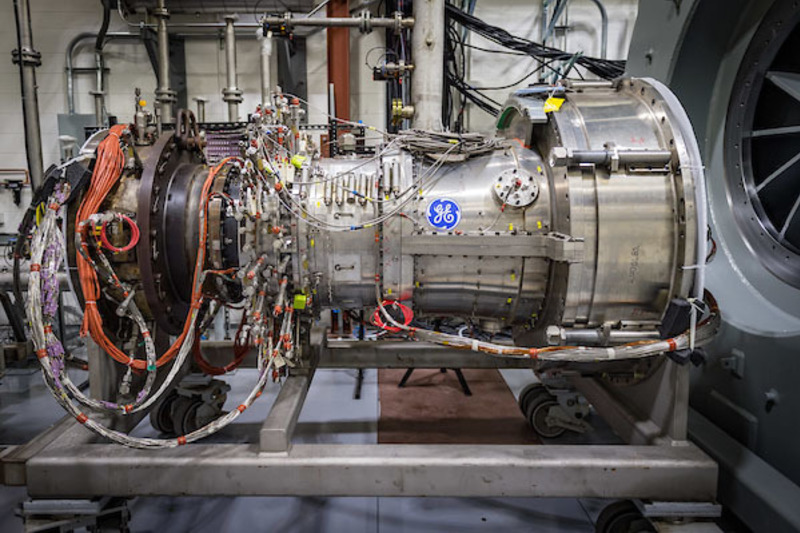
Turbomachinery Laboratory
The Notre Dame Turbomachinery Laboratory (NDTL) is a 25,000-square-foot facility located in Downtown South Bend's Ignition Park. At this world-class research and testing facility, student and faculty researchers study components for gas turbine engines used by commercial and military aircraft, power plants, and the oil and gas industry, providing hands-on experience that prepares students for careers in aerospace and other high-tech engineering fields.